Quick answer: San Gervasio is Cozumel's largest Maya archaeological site and the island's only ruins worth a dedicated trip. It was the main sanctuary of Ixchel, the Maya goddess of the moon, fertility and childbirth, and women once crossed from the mainland by canoe to make offerings here. It's in the jungle in the middle of the island, about 20–25 minutes by car or taxi from downtown San Miguel. Plan on 1 to 2 hours on mostly flat, shaded paths. It's open every day from about 9:00 to 15:30 (last entry around 15:00), and entry is a combined INAH and local access fee of roughly US$15–25 per adult. The buildings are small compared with Tulum or Chichén Itzá, so come for the history, the jungle setting and the quiet, not for giant pyramids.
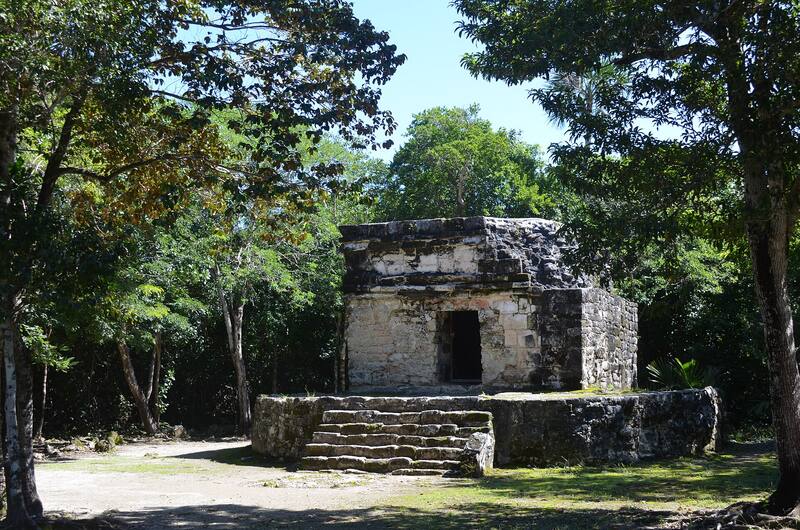
The temple in the photo above sits in a forest clearing at San Gervasio. Much of the site looks like this: low stone buildings, white Maya roads and shade trees, with iguanas sunning themselves on the walls. It's a calm, easy visit and a good change of pace from the beach.
San Gervasio at a Glance
| What | Details |
|---|---|
| What it is | The largest Maya site on Cozumel, a pilgrimage center dedicated to the goddess Ixchel |
| Where | Center of the island, north of the cross-island road, about 7 km (4 miles) up a paved access road |
| From downtown | About 20–25 minutes by car or taxi |
| Hours | Daily, about 9:00–15:30; last entry about 15:00 |
| Entry (2026) | INAH fee plus a separate access fee; roughly US$15–25 per adult in total |
| Time needed | 1–2 hours |
| Walking | About 2–3 km (1–2 miles) of flat dirt and gravel paths, mostly shaded |
| Climbing | Not allowed on the structures |
| Best time | Right at opening, before the heat and the cruise tours |
| Best for | History lovers, families, birders, anyone wanting a shady break from the sun |
Prices and hours change. Confirm at the gate or on the official INAH page for San Gervasio before you go.
What Is San Gervasio?
San Gervasio was the political and religious capital of ancient Cozumel, which the Maya called Cuzamil, "land of the swallows." People lived here for well over a thousand years, and the site reached its peak between about AD 1000 and the Spanish arrival in the early 1500s, when Cozumel was one of the most important trading and pilgrimage centers on the Yucatán coast.
The site isn't one big plaza. It's a set of building groups spread through the forest and linked by sacbeob, the raised white limestone roads the Maya built. You walk from group to group along those same roads, which is part of what makes the visit feel special.
Who was Ixchel?
Ixchel was the Maya goddess of the moon, fertility, childbirth, medicine and weaving. Cozumel was her most important shrine. Maya women, and especially those hoping to have children, traveled from all over the region to cross the channel from the mainland by canoe and leave offerings for her at the island's temples. That journey is re-enacted every spring in the Sacred Mayan Journey (Travesía Sagrada Maya), when paddlers cross from the mainland to Cozumel in traditional canoes.
What You'll See at San Gervasio
A loop trail takes you past the main groups. Signs in Spanish, English and Maya explain each one. These are the highlights:
| Structure | What it is |
|---|---|
| Las Manitas ("Little Hands") | A small building with red handprints still visible on the inside walls |
| Los Murciélagos ("The Bats") | Thought to be the residence of the island's ruler, with a palace and courtyards |
| El Arco ("The Arch") | A stone arch that marked the entrance to the central plaza, where several Maya roads meet |
| Central plaza and Las Columnas | The heart of the site, with a columned palace where the elite lived and held ceremonies |
| Ka'na Nah ("High House") | The tallest building at San Gervasio, believed to be the main temple to Ixchel |
| Chichan Nah ("Little House") | A tiny temple with a doorway so low that most adults would have to stoop |
| Casa Alta and El Osario | Farther-out groups along the sacbé, quieter and good for spotting wildlife |
You'll also see iguanas, lizards, butterflies and plenty of birds, and sometimes coatis crossing the paths. Bring patience and a zoom lens.
Is San Gervasio Worth Visiting?
Yes, if you go in with the right expectations. The structures are small and low, and you can't climb them. If you've already seen Chichén Itzá, Tulum or Cobá, San Gervasio won't wow you with size. What it does offer is real Maya history on the island itself, a peaceful jungle walk with few crowds early in the day, and a short drive from town that fits easily into half a day.
It's a great pick for cruise visitors who want a cultural stop without taking the ferry to the mainland, for families with kids who like iguanas, and for anyone who wants an hour or two out of the sun. If you only want impressive pyramids, save your time for a mainland day trip instead.
San Gervasio vs. Tulum: which should you visit?
If you're staying on Cozumel for a few days and have a whole day to spare, Tulum gives you a dramatic cliff-top setting over the sea, but it means a ferry and a long road trip, plus bigger crowds. San Gervasio takes about half a day from your hotel or ship, costs much less, and is much quieter. Many visitors do San Gervasio on a short stay and save Tulum for a longer trip. Our ferry guide covers getting to the mainland.
How to Get to San Gervasio
- Drive or take a taxi east from downtown San Miguel on the cross-island road (Carretera Transversal).
- Turn left at the signed San Gervasio turnoff, about 7 km (4 miles) from town.
- Follow the paved access road north through the jungle for about 7 km (4 miles) to the parking lot and entrance.
The whole trip takes about 20–25 minutes. Parking is free.
- Rental car or jeep: the easiest option, and you can combine the ruins with the east side on the same day. San Gervasio is a short detour on the way back to town from the island loop.
- Taxi: taxis don't wait at the site, so agree on a round-trip price and waiting time with your driver before you leave town.
- Tour: many island tours stop here, and it's the simplest choice from the cruise piers. You'll find local operators in our tours directory.
- Scooter: possible, but the cross-island road is fast. Read our guide to getting around Cozumel first.
San Gervasio Entrance Fees and Hours (2026)
You pay two separate fees at San Gervasio. One is the federal entry fee set by INAH (Mexico's National Institute of Anthropology and History). The other is an access and services fee charged locally for the road, parking and visitor area. Together they usually come to roughly US$15–25 per adult. Children, Mexican students and teachers with ID, seniors and people with disabilities may get in free or at a discount on the INAH portion, and Mexican citizens and residents get free INAH entry on Sundays.
- Hours: open every day, about 9:00 to 15:30, with last entry around 15:00. Arrive by 14:30 to give yourself time.
- Payment: bring pesos in cash in case the card machine is down.
- Guides: licensed local guides often wait near the entrance. A guide is worth it here because the buildings are small and the stories behind them are the best part. Agree on the price before you start.
All prices are 2026 estimates and can change at any time. For the official details, see the INAH visitor guide to San Gervasio (PDF, in Spanish).
Get Our Cozumel Insider Newsletter
New guides, local tips, island news and upcoming events in your inbox. One email a week, no spam. Sign up and get our free 18-page Cozumel Insider's Guide (PDF) right away.
Tips for Visiting San Gervasio
- Go at opening time. It's cooler, the light is better, and you'll beat the tour buses from the cruise ships.
- Bring insect repellent. It's a forest, and the mosquitoes can be fierce, especially after rain.
- Wear comfortable shoes, a hat and reef-safe sunscreen. The paths are easy but uneven in places.
- Carry water. There's a small snack and souvenir area at the entrance, but nothing on the trails.
- Stay on the paths and don't climb or lean on the buildings. They're fragile, and it's not allowed.
- Restrooms are near the entrance only, so use them before you start the loop.
- Combine it with something else. San Gervasio pairs well with a drive to the east side for lunch on the beach, or with the Punta Sur Eco Park, which has its own small Maya ruin, El Caracol.
Other Maya Ruins on Cozumel
More than 30 Maya sites have been found on Cozumel, but most are small and scattered through the jungle. Besides San Gervasio, the ones visitors can easily see are:
- El Caracol, a small shell-shaped building inside Punta Sur Eco Park on the south tip, which may have worked as an early wind and storm warning.
- El Cedral, a small Maya structure in a village south of town, best known for its lively festival every spring.
Some coastal ruins along the east side are visible from the road too. You can read more about the island's protected parks on the Cozumel Parks website.
Frequently Asked Questions
Are the San Gervasio ruins worth visiting?
Yes, if you want Maya history without leaving Cozumel. San Gervasio is the island's largest Maya site and a peaceful jungle walk, but its buildings are small and can't be climbed. Visitors expecting big pyramids like Chichén Itzá may be disappointed.
How much does it cost to visit San Gervasio in Cozumel?
Visitors pay an INAH entry fee plus a separate local access fee, which together usually come to roughly US$15–25 per adult in 2026. Prices change, so bring pesos in cash and check at the gate.
What are the San Gervasio opening hours?
San Gervasio is open every day from about 9:00 to 15:30, with last entry around 15:00. Arriving at opening time is best for cooler weather and fewer crowds.
How long do you need at San Gervasio?
Most people spend 1 to 2 hours walking the loop trail at San Gervasio. With a guide or a stop for wildlife photos, plan on closer to 2 hours.
How do you get to San Gervasio from the cruise port?
Take a taxi or rental car east on the cross-island road and turn north at the San Gervasio sign, then follow the access road about 7 km to the site. The trip takes about 20–30 minutes from the piers. Many island tours also stop at San Gervasio.
Can you climb the ruins at San Gervasio?
No. Climbing the structures at San Gervasio is not allowed. Visitors walk around them on marked paths.
Who was the goddess Ixchel?
Ixchel was the Maya goddess of the moon, fertility, childbirth, medicine and weaving. Cozumel, and San Gervasio in particular, was her most important sanctuary, and Maya women made canoe pilgrimages from the mainland to honor her.
What should I bring to San Gervasio?
Bring insect repellent, water, a hat, sunscreen, comfortable walking shoes and cash in pesos for the entrance fees and a guide.
Plan Your Visit
Pick a morning, get to the gate at opening time, hire a guide at the entrance, and spend an unhurried hour or two walking the old Maya roads. Then keep driving east for lunch by the waves, or head back to town for a swim.
Keep planning:
- Cozumel's east side guide
- Punta Sur Eco Park guide
- Cozumel cruise port guide
- How to get around Cozumel
- Cozumel tours & diving directory
Run island tours or guide visitors at San Gervasio? Get your business in front of visitors planning their Cozumel day on Blog Cozumel.
Top photo: a Maya temple at San Gervasio, Cozumel. "San Gervasio, La Casa Grande, en Cozumel, México" by Saúl Peláez S., via Wikimedia Commons, licensed under CC BY-SA 3.0. Resized.