Some links in this guide are affiliate links. If you buy through them, Blog Cozumel may earn a small commission at no extra cost to you. It helps keep the guides free.
Quick answer: Yes, Cozumel has cenotes, but very few you can easily visit. The island sits on porous limestone riddled with caves, and the best known is Cenote Aerolito, a mangrove-fringed pool just south of town that connects to the sea through a long underwater cave. Since 2023 it has been a federally protected natural area, and it isn't a swimming hole with facilities. The lagoon at Chankanaab Park is another cave-fed pool you can see on a park visit, and some jeep and ATV tours stop at small cenotes on private land in the jungle. For the classic experience of swimming in a crystal-clear freshwater cenote, take the ferry to Playa del Carmen: dozens of cenotes are 30 to 60 minutes away by road, with entrance fees of about 150 to 500 pesos (US$8 to $28).
Cenotes are one of the great sights of the Yucatán Peninsula, and a lot of visitors ask whether they can see one without leaving Cozumel. Here's the honest answer, what's on the island, and how to plan a cenote day on the mainland.
Cenotes and Caves Near Cozumel at a Glance
| Place | Where | What it is | Can you swim? | Cost |
|---|---|---|---|---|
| Cenote Aerolito | Cozumel, just south of town near the coast road | Mangrove pool linked to the sea by an underwater cave; protected area | Not a swimming spot; cave diving only with a qualified guide | Check locally |
| Chankanaab lagoon | Cozumel, Chankanaab Park (km 9) | Natural lagoon fed by underwater tunnels from the sea | No, viewing only | Included in park entry (about US$31) |
| Jungle cenotes on tours | Cozumel, inland on private land | Small sinkholes and caves | Sometimes, depending on the tour | Included in tour price |
| Cenotes south of Playa del Carmen | Mainland, 30 to 45 min from the ferry | Open freshwater cenotes for swimming and snorkeling | Yes | About 150–250 pesos each |
| Cenotes near Tulum | Mainland, about 1 hour from the ferry | Famous cave and open cenotes | Yes | About 350–500 pesos each |
Entrance fees are 2026 estimates and change often. Most cenotes take cash in pesos only.
What Is a Cenote?
A cenote (say-NO-tay) is a natural sinkhole where the limestone roof of an underground cave has collapsed, exposing the groundwater below. The Yucatán Peninsula has thousands of them, linked by some of the longest underwater cave systems in the world. For the ancient Maya they were sacred, the main source of fresh water and a doorway to the underworld.
Some cenotes are wide open pools ringed by trees, some are half-open caverns, and some are fully underground caves you enter down a ladder. The water is usually fresh, very clear and cool, about 24 to 25°C (75 to 77°F) year-round. Near the coast, the fresh water floats on top of salt water, and divers can see the blurry line between them, called a halocline.
Are There Cenotes in Cozumel?
Yes. Cozumel is made of the same limestone as the mainland, and the island is full of caves and sinkholes, many of them hidden in the jungle on private or protected land. The difference is that Cozumel has no big, developed swimming cenotes like the ones near Playa del Carmen and Tulum. Island cenotes also tend to be connected to the sea, so the water is often brackish rather than fresh.
Cenote Aerolito
Cozumel's best known cenote is Cenote Aerolito (also called Aerolito de Paraíso), a pool surrounded by mangroves just inland from the coastal road south of town, not far from the cruise piers. Underneath it, a long underwater cave runs out to the sea, and the cave is home to tiny creatures that live nowhere else on Earth.
In August 2023, the Mexican government declared Aerolito and the surrounding wetland a protected natural area for flora and fauna, about 10 hectares (25 acres). That means it's managed for conservation, not tourism. What you should know before going:
- It isn't a swimming cenote. There are no lifeguards, changing rooms or stairs like the mainland cenotes, and visitors have reported seeing crocodiles in the mangroves. We don't recommend swimming there.
- Cave diving is for experts only. The underwater cave is a serious cave dive that requires cave training and a local guide who knows the system.
- Rules can change. Because it's a protected area, access and activities may be limited. Ask a local dive shop or your hotel before you go.
Chankanaab lagoon
At Chankanaab Park, the name means "small sea" in Maya, after the park's natural lagoon. It's a deep, clear pool joined to the ocean by underwater tunnels, so fish and other sea life swim in and out. Swimming in the lagoon has been banned for years to protect it, but you can walk around it and see the fish from above. Entry to the park, about US$31 for adults, also includes the beach, snorkel area and botanical garden.
Cenotes on jeep and ATV tours
Several off-road jeep, buggy and ATV tours on Cozumel visit small cenotes and caves on private land in the jungle, sometimes with a short swim. They're more about the ride and the jungle than the cenote itself, so don't expect a big, crystal-clear pool. Ask the operator exactly what the stop is like and whether you can swim. Compare local tour operators in our tours directory, and see our Cozumel excursions guide.
The Best Cenotes to Visit From Cozumel
For the cenote experience you've seen in photos, plan a day on the mainland. The ferry from downtown Cozumel to Playa del Carmen takes about 45 minutes. Our Cozumel ferry guide has times and prices.
Cenotes south of Playa del Carmen (30 to 45 minutes)
Along Highway 307 between Playa del Carmen and Puerto Aventuras is a cluster of open, swimmable cenotes that are easy to reach by taxi or rental car:
- Cenote Azul: a big, open pool with shallow and deep sections, small fish and a rock to jump from. About 150 pesos.
- Jardín del Edén: a large open cenote surrounded by jungle, good for snorkeling and cliff jumps. About 200 pesos.
- Cenote Cristalino: clear, calm and usually less crowded, with a small cave section.
You can visit two or three of these in a morning and be back on the ferry by mid-afternoon.
Cenotes near Tulum (about 1 hour)
- Dos Ojos: two connected cavern cenotes famous with snorkelers and divers, with beams of light through crystal-clear water. About 350 to 500 pesos.
- Gran Cenote: a half-open cavern with turtles, small fish and wooden walkways. About 500 pesos.
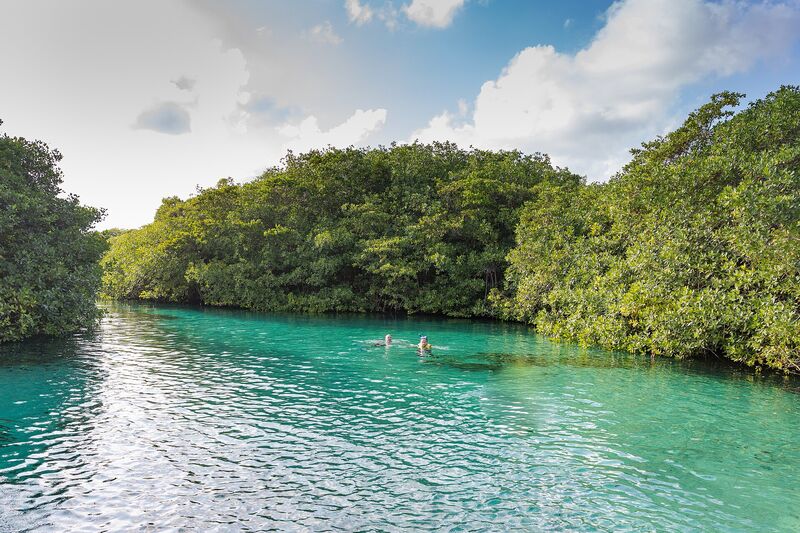
- Casa Cenote: a long, mangrove-lined cenote that runs toward the sea, where fresh and salt water meet.
The Tulum cenotes pair well with the Tulum ruins on the same day, but it's a long day from Cozumel. Leave on an early ferry.
Cenote diving
Cozumel divers who want to try a cenote usually book a cavern dive on the mainland. Cavern dives stay within sight of daylight and are open to certified open water divers with good buoyancy, led by a certified cavern guide. Many Cozumel dive shops can arrange one, including transport from the ferry. Expect to pay roughly US$150 to $250 for two cavern dives, plus entrance fees. Read our scuba diving guide for more.
Can You Do a Cenote Trip on a Cruise Stop?
It's possible but tight. You need about two hours for the round-trip ferry, plus travel on the mainland, so only try it with a port call of eight hours or more, and book a cruise excursion or a guide who knows your all-aboard time. If you have less time, stay on Cozumel and visit Chankanaab Park instead. Our cruise port guide has ideas that fit a shorter stop.
Tips for Visiting Cenotes
- Shower first. Most cenotes require a quick rinse before you swim, to keep the water clean.
- Skip the sunscreen and bug spray before swimming. Chemicals harm the fragile water, and most cenotes ban them. Many are shaded anyway.
- Bring pesos for entrance fees, life jackets, lockers and parking. Most cenotes are cash only.
- Wear water shoes for slippery rocks and ladders, and bring a snorkel mask to see the fish and rock formations.
- Go early. Cenotes are quietest when they open, around 8 or 9 a.m., before the tour buses arrive.
- Respect the caves. Don't touch the stalactites, and never swim into a cave beyond the marked area.
- Use a dry bag for your phone and cash.
Get Our Cozumel Insider Newsletter
New guides, local tips, island news and upcoming events in your inbox. One email a week, no spam. Sign up and get our free 18-page Cozumel Insider's Guide (PDF) right away.
Frequently Asked Questions
Are there cenotes in Cozumel?
Yes, but only a few you can visit, and none are big developed swimming cenotes. The best known is Cenote Aerolito, a protected area just south of town. For classic swimming cenotes, take the ferry to Playa del Carmen; dozens are 30 to 60 minutes away.
Can you swim in Cenote Aerolito in Cozumel?
It isn't set up for swimming. Aerolito became a protected natural area in 2023, it has no facilities or lifeguards, and crocodiles have been seen in the mangroves. The underwater cave is for trained cave divers with a local guide.
Can you swim in the Chankanaab lagoon?
No. Swimming in the lagoon at Chankanaab Park is not allowed, to protect it. You can walk around it and see the fish, and swim and snorkel at the park's beach instead.
What are the closest cenotes to Cozumel?
On the mainland, the cenotes along Highway 307 south of Playa del Carmen, such as Cenote Azul and Jardín del Edén, are about 30 to 45 minutes by road from the ferry pier. With the 45-minute ferry, that's about 1.5 hours from downtown Cozumel.
How much does it cost to visit a cenote?
In 2026, entrance fees are about 150 to 250 pesos (US$8 to $14) for the cenotes near Playa del Carmen and about 350 to 500 pesos (US$20 to $28) for famous ones near Tulum, such as Dos Ojos and Gran Cenote. Add the ferry and transport.
Can I go cenote diving from Cozumel?
Yes. Many Cozumel dive shops arrange cavern dives in mainland cenotes, including the ferry and transport. Cavern diving is open to certified open water divers with good buoyancy; full cave diving needs special cave training.
Keep planning:
- Day trips from Cozumel
- Chankanaab Park guide
- Cozumel–Playa del Carmen ferry
- Scuba diving in Cozumel
- El Cielo starfish sandbar
Run cenote tours or cavern dives from Cozumel? Reach travelers planning their day trips.
Top photo: swimmers at Casa Cenote, a mangrove-lined cenote near Tulum on the mainland, from "Casa Cenote in Mexico" by dronepicr, via Wikimedia Commons, licensed under CC BY 2.0. Resized.